On this page
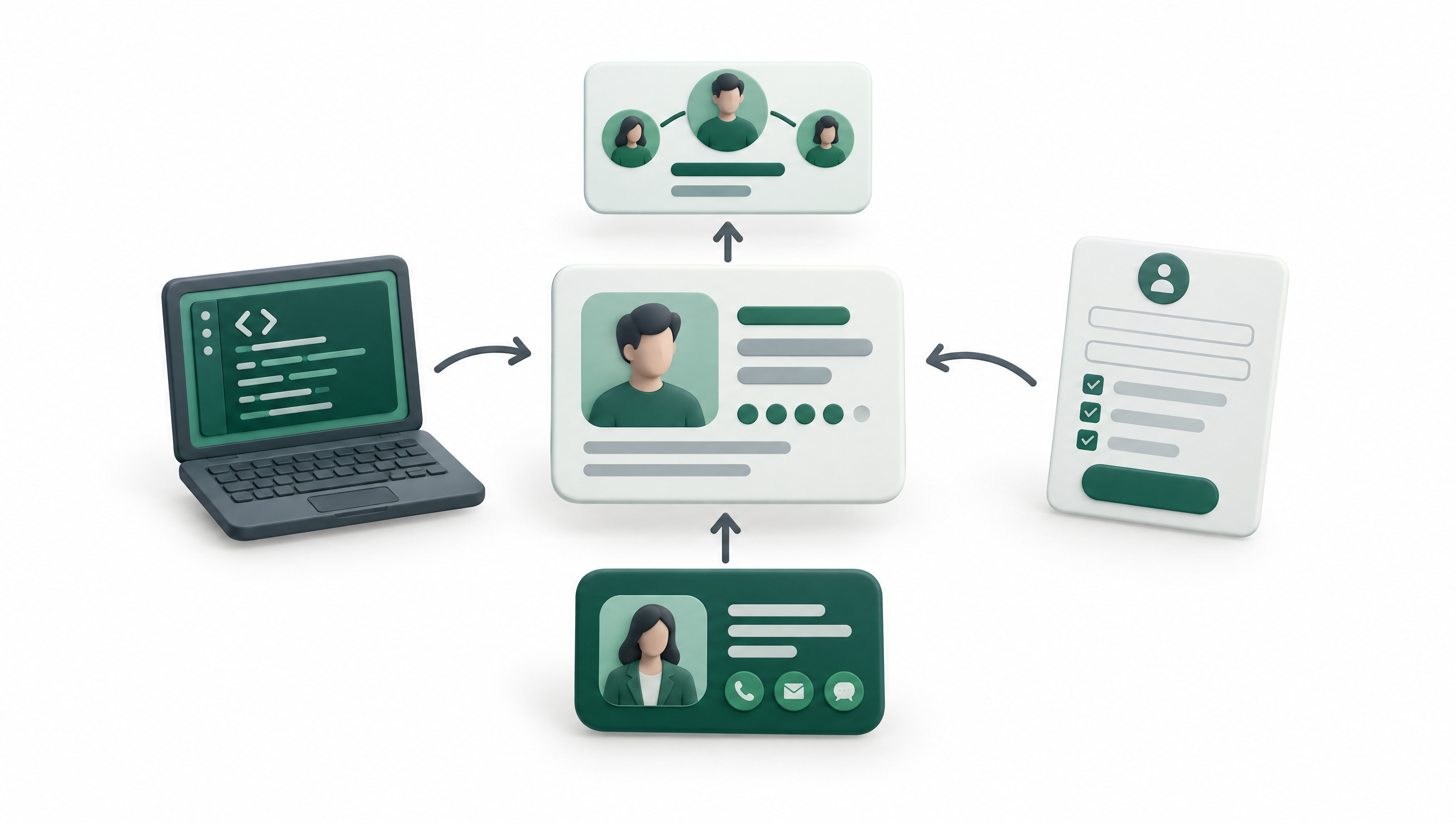
Software developer recruiting is the process of finding, assessing and contacting people for software roles. The right option depends on whether you need active applicants, direct access to developers, outside recruiting support or evidence from public technical work.
For many teams, the practical starting point is direct sourcing with evidence linked to each candidate. It gives your team control over the criteria and outreach. Agencies suit teams that want outside help, job boards collect inbound applicants, and referrals draw on people your network already knows. We compare these option types by candidate access, technical evidence, internal effort and fit for the hiring situation. No named ranking is possible because comparable service and pricing details were not available across multiple providers.
The short answer
Choose the option that matches how you want candidates to enter the process and how much recruiting work your team can own.
- Direct developer sourcing tools: Best for finding people based on public technical work and role must-haves.
- Software developer recruiting companies: Best for teams that want an outside recruiter to run part of the search.
- Job boards: Best for collecting applications from people already looking at advertised roles.
- Employee referrals: Best for reaching developers known by your employees and professional network.
- Internal recruiter sourcing: Best for teams with recruiters who can manage search, outreach and follow-up directly.
| Option | What it does | Best for | Pricing basis |
|---|---|---|---|
| Direct developer sourcing tools | Find and assess possible candidates from public professional or technical information | Evidence-led outbound search | Not published |
| Software developer recruiting companies | Provide outside recruiting support for a role | Teams needing external capacity | Not published |
| Job boards | Publish roles and collect applications | Inbound recruiting | Not published |
| Employee referrals | Invite employees to recommend people they know | Network-based candidate discovery | Not published |
| Internal recruiter sourcing | Assign search and outreach to an in-house recruiter | Teams with recruiting capacity | Internal staffing cost |
How did we compare these options?
We compared option types rather than named vendors because there were not enough confirmed, like-for-like providers to support a fair ranking. The criteria are candidate access, technical evidence, internal effort, control of outreach and fit for the role.
This page is published by ayhire. AyHire is one direct sourcing option, so we describe where it fits without placing it first by default or claiming it suits every search.
Use these checks before choosing an approach:
- Candidate access: Decide whether you need active applicants, passive prospects or both.
- Evidence: Check what information supports each recommendation and whether your team can inspect it.
- Ownership: Decide who writes the search criteria, contacts candidates and manages replies.
- Role fit: Match the channel to the role, location, seniority and must-have experience.
- Process fit: Check whether the option works with your existing recruiter and hiring manager workflow.
We did not rank these options by price, placement rate, time to hire or candidate volume. Comparable figures were not available, and those measures can change with the role and service terms.
What should you know about direct developer sourcing tools?
Direct developer sourcing tools help a team identify people who may fit a role before those people apply. They suit outbound recruiting when a hiring manager wants to define technical must-haves and inspect the evidence behind a possible match. The quality of the result depends on the available public information and the criteria entered by the team.
AyHire searches for developers who match a role description and evaluates public profiles against specified must-haves. Its developer candidate discovery returns evidence-linked profiles, checks whether candidates may be open to work and creates a shared shortlist for team review.
Best for
- Roles where public GitHub work can provide relevant evidence.
- Teams that want to review why a person matched before starting outreach.
Strengths
- The assessment links back to profile evidence.
- Teams can search against role-specific must-haves.
- Searches and shortlists can be available through Claude Code, Codex, Cursor and other agents over MCP.
Limits
- Public GitHub work does not represent every developer or every relevant skill.
- A profile match does not replace interviews, work authorization checks or your full assessment process.
- The tool identifies people to review. It does not make the hiring decision.
Who should skip it: Teams hiring roles for which public code provides little useful evidence, or teams that only want applicants who have already applied, should use another channel or combine options.
For a closer look at adjacent tools and methods, read our guide to GitHub recruiting tools.
What should you know about software developer recruiting companies?
Software developer recruiting companies provide people who help search for, contact or screen candidates. They can suit a team that lacks internal recruiting capacity or needs help running a defined search. Before signing, establish which tasks the company owns, what evidence it provides and how candidate ownership works.
Ask each company to explain its search method in plain terms. A large contact database does not by itself show that candidates meet your technical requirements. Your agreement should also make clear who contacts candidates, how duplicate submissions are handled and when fees become due.
Best for
- Teams that need a recruiter to manage search activity and communication.
- Searches where external market coverage matters more than direct control of every step.
Strengths
- Can add recruiting capacity without assigning the entire search to an employee.
- May manage outreach and candidate coordination, depending on the service.
Limits
- Service scope, technical assessment and pricing can differ by company.
- Hiring managers may have less direct control over the initial search.
- You still need an internal process for evaluating candidates consistently.
Who should skip it: Teams that want to own candidate discovery and outreach, or that cannot define the recruiter's responsibilities clearly, may be better served by an internal or tool-assisted search.
What should you know about job boards?
Job boards publish an opening so interested people can find it and apply. They are an inbound channel, which makes them different from sourcing tools and recruiting companies that may identify people before they apply. They work best when the job description, location rules and application process are clear.
Watch "Is it too late to become a software developer?" on YouTube
A job board can support software engineer jobs, DevOps engineering roles, technical support opportunities and data analysis openings. It can also create screening work because applicants choose whether to apply. Build a consistent review process before opening the role, rather than changing the standard after applications arrive.
Best for
- Roles likely to attract active job seekers.
- Teams prepared to review and respond to inbound applications.
Strengths
- Gives candidates a direct route to express interest.
- Lets the employer present the role requirements and application steps.
Limits
- Posting does not ensure that the right candidates will apply.
- It may not reach developers who are open to a conversation but not browsing job listings.
Who should skip it: Teams that need a narrow technical profile and cannot wait for matching applicants should add direct sourcing or recruiter-led outreach.
The video below shows one developer's discussion of whether it is too late to enter software development, which can help hiring teams understand a question some career changers bring to entry-level searches.
Watch "Is it too late to become a software developer?" by Let's Get Rusty.
What should you know about employee referrals?
Employee referrals use the professional networks of people already connected to your company. They can uncover candidates who would not see a job advertisement, and the referring employee may provide useful context. A referral should open a conversation, not bypass the normal assessment standard.
Give employees a clear role description and explain which requirements are mandatory. Record referrals in the same system as other candidates so ownership and status remain visible. Apply the same interview criteria to referred and non-referred candidates.
Best for
- Teams with employees who know people in the relevant technical community.
- Searches where a trusted introduction can support initial outreach.
Strengths
- Starts with a direct professional connection.
- Can complement job boards and outbound sourcing.
Limits
- The available network may be narrow or uneven across specialties.
- A recommendation is not evidence that the person meets the role requirements.
Who should skip it: Teams without a relevant employee network should not rely on referrals as the main source of candidates.
What should you know about internal recruiter sourcing?
Internal sourcing assigns candidate discovery and outreach to a recruiter inside the company. It gives the employer direct control over search criteria, messaging and follow-up. It works when the recruiter has enough time, suitable tools and regular access to the hiring manager.
The hiring manager should separate must-haves from preferences before the search starts. Recruiters can then test queries, review profiles and report where the criteria are too broad or too restrictive. Shared notes help the team avoid repeating weak searches.
Best for
- Employers with established recruiting staff and repeat technical hiring needs.
- Teams that want to keep search knowledge and candidate relationships in-house.
Strengths
- Keeps outreach and candidate records under direct company control.
- Allows search criteria to change through close recruiter and manager feedback.
Limits
- Requires internal time and recruiting skill.
- A recruiter may need added tools or outside support for a specialized search.
Who should skip it: Teams without available recruiting capacity should consider an agency, a sourcing tool or a combined approach.
How should you choose a software developer recruiting option?
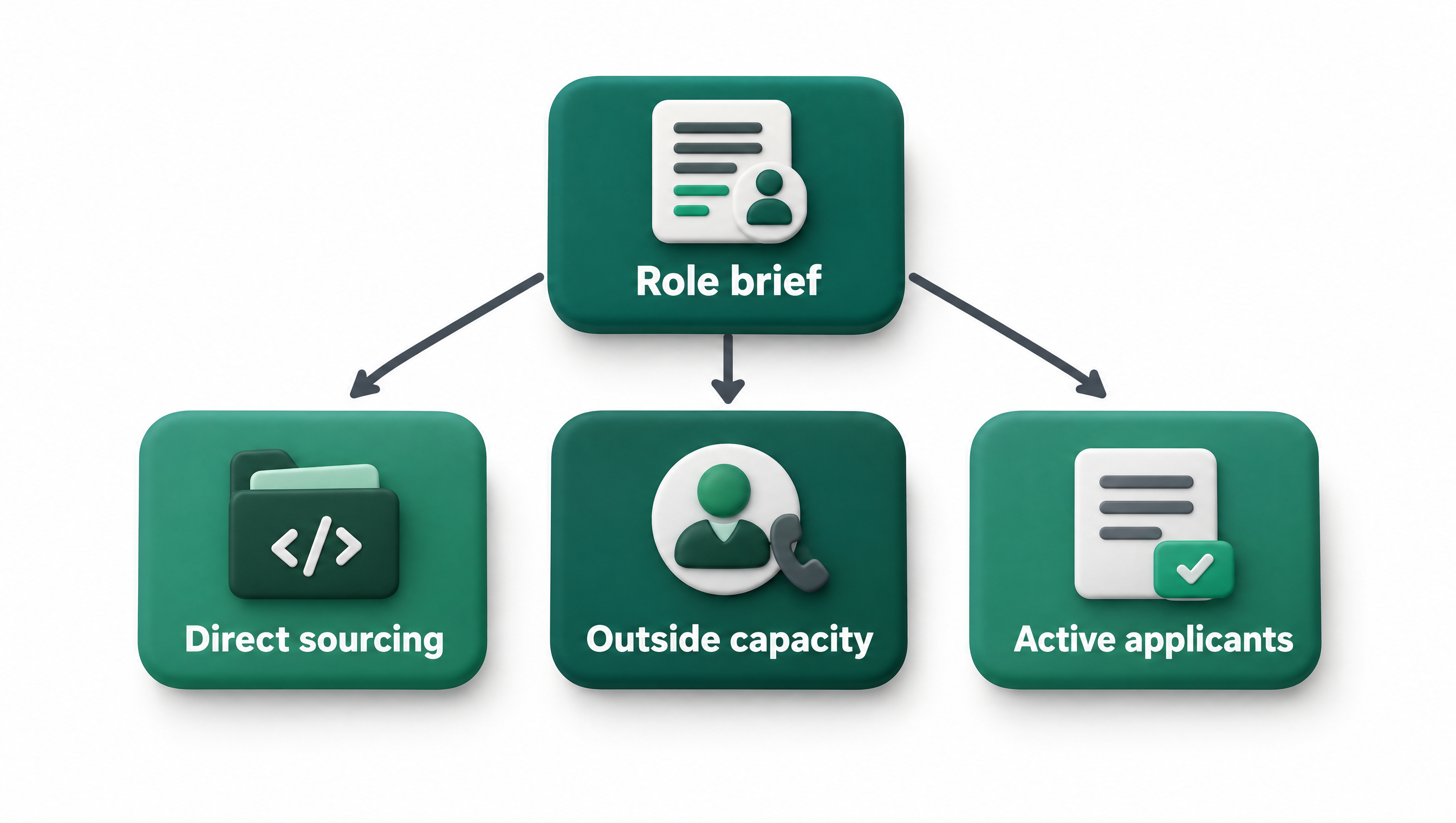
Start with the type of candidate access you need, then decide who will own the work. A mixed approach is often reasonable, but each channel should have a clear purpose so candidates do not receive duplicate or conflicting outreach.
Choose direct sourcing for evidence-led outbound search
Use a direct sourcing tool when public technical work is relevant and your team wants evidence behind each possible match. Define must-haves that can be checked from public profiles. Do not treat missing public work as proof that a developer lacks the skill.
Choose recruiting companies when you need outside capacity
Use a recruiting company when your team needs another person or firm to run part of the search. Ask for a written scope covering sourcing, outreach, screening, candidate ownership and fees. Compare companies on the same scope rather than on broad claims.
Choose job boards for active applicants
Use job boards when you want people to discover the role and submit an application. State the location, level and technical expectations clearly. Pair the board with an agreed screening method before applications arrive.
Choose referrals or internal sourcing for direct control
Use referrals when your employees have relevant networks. Use internal sourcing when a recruiter can own repeated searches and follow-up. Both approaches still need documented criteria and a consistent assessment process.
If evidence from public developer work belongs in your search, use AyHire to create a shortlist for your team to review. Keep job boards, referrals or recruiter support where they serve a different part of the hiring plan.
FAQ
What does software developer recruiting include?
Software developer recruiting includes defining the role, finding possible candidates, contacting them, assessing relevant evidence and moving suitable people into the hiring process. A team may use direct sourcing, recruiting companies, job boards, referrals or internal recruiters.
How does software developer recruiting salary affect a search?
The salary range affects who may consider the role and how recruiters position it. Set the range through your company's compensation process, then share it consistently with recruiters and candidates where applicable.
How should I compare software developer recruiting companies?
Compare software developer recruiting companies by service scope, candidate source, technical evidence, outreach ownership, fee terms and reporting. Ask each company to answer the same questions in writing before you compare proposals.
How do I set a Software Developer salary?
Set a Software Developer salary by using your compensation framework, role level, location policy and required experience. Do not copy a figure from an unrelated listing without checking whether the responsibilities and employment terms match.
Where should a company advertise Software Engineer jobs?
Advertise Software Engineer jobs on channels used by the candidates you want to reach, then add direct sourcing if inbound applications are insufficient. The job description should state the work, level, location expectations and application process.
How should teams recruit for Entry level Software Engineer jobs Phoenix?
For Entry level Software Engineer jobs in Phoenix, define whether the role is on-site, hybrid or remote and make the expected experience clear. Job boards can reach active applicants, while schools, referrals and direct outreach can broaden the search.
Can GitHub activity replace a technical interview?
No, GitHub activity should not replace your full assessment process. Public work can provide evidence for review, but it may be incomplete, collaborative or unrelated to the exact role.
Should a team use more than one recruiting option?
Yes, a team can use more than one option when each channel has a clear purpose. Track candidate ownership and outreach centrally to reduce duplicate contact and inconsistent messages.
If you want evidence-linked developer profiles for an outbound search, start with AyHire's developer candidate discovery and review every match against your own hiring process.
Sources
- AyHire developer candidate discovery
- AyHire guide to GitHub recruiting tools
- "Is it too late to become a software developer?" by Let's Get Rusty
Last checked: 2026-11-02